


Sealing Performance In an industrial system, the sealing performance to be achieved should be considered in the selection of the gasket thickness. The gasket thickness influences the conformability of the gasket to the flanges, behaviour of the gasket to loads, and the efficiency of the gasket to be closed when placed under operating condition. The selection of the appropriate thickness is determined by the pressure, temperature, mechanical stability and surface finish. A good gasket thickness design will avoid leakages, will reduce the maintenance needs and will maximize the long life efficiency of the system.
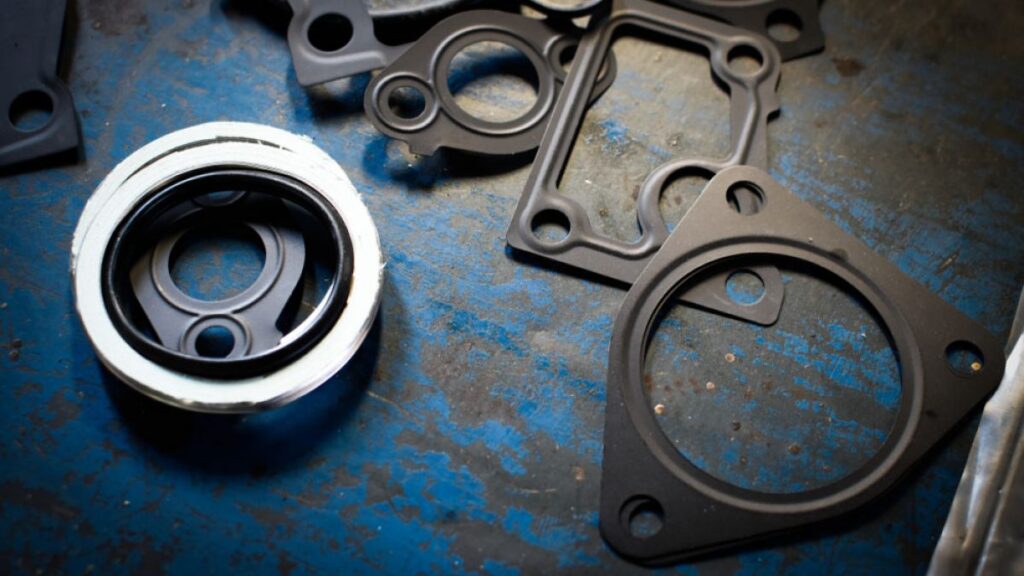
Understanding Operating Conditions in Gasket Applications.
Operation conditions are the primary considerations in the choice of gasket thickness. High pressure operating systems in the system are more likely to use thinner gaskets to minimize the possibilities of blowout and maintain structural integrity. The low pressure systems, in their turn, may experience a somewhat heavier gasket which is better able to trace the contour anomalies and offers a better seal.
Temperature is another factor that is significant in gasket behavior. High temperatures can lead to material expansion or compression or wear and tear which can affect sealing performance. Thermal factor is even more important in areas where materials are applied such as insulations that are made of ceramic fiber insulation, as the retention and transfer of heat can have an impact on the surrounding components as well as the gasket itself.
Flange Condition And Finish Tests.
The condition of the surfaces of flanges is a direct determinant of the thickness of the gaskets. Proper machined and smooth surfaces tend to require less thick gaskets as the number of defects to oppose is less. In its turn, non-even or uneven surfaces may require the use of heavier gaskets to seal any crevices and create a viable seal.
Flange alignment and flatness also determine thickness. Misaligned flanges or those with minimal quantities of warping will result in disproportionate loads on a gasket. Such variations may be accommodated with a somewhat fatter gasket, but too much gasket thickness may also lead to reduced load concentration, and sealing integrity. In such cases, there would be a need to balance between the thickness and the right installation practices.
Mathematical Aspects And Interaction Of Thickness.
The overall performance of gasket materials can be predicted by the performance of materials and thickness. Lighter materials can be compressed and thinner profiles can be designed to give effective sealing. Harder, or stronger materials may require thicker to get enough surface contact with material and the ability to load.
Fabric fiberglass is usually reinforced material which is used in areas where additional strength and stability is required. These materials can be very effective in varying degrees of thickness based on the application, but their compressive characteristics need to be evaluated with foremost scrutiny. Compressibility and resilience of the material used must be accommodated with the thickness so that the compressibility is not excessive and there is also the absence of enough sealing force.
The Pressure, Load And Compression Control.
Compression rate to which a gasket is subjected depends on thickness of the gasket and the volume of bolt load. The fatter the gasket, the higher the load required to give proper compression and the thinner the gasket the less force required to give maximum sealing. Compression may lead to leakages as well as excessive compression may wear-out the gasket material and reduce its life.
Correct distribution of loads across the gasket surface is important. Uneven compression can occur by the way it is not suitable for use, or it can occur when it is installed unequally. The selection of a gasket thickness, which corresponds to the available bolting capacity, is one of the factors that assure even compression and a long life of sealing performance. This is required especially in systems where vibration is mostly experienced or on varying loads.
Installation Art Practice And Time Performance.
The proper installation techniques are critical to the required functionality of a selected gasket thickness. Even the most suitable thickness can fail where the tightening of the bolts is not done in a similar manner, or where the consideration of the torque requirements are not observed. The load is spread by the patterns of tightening and the gasket is uniformly pressed on all the sections of sealing surface.
Long term performance is also the ability of the gasket to retain its characteristics at the operating conditions. It is also possible that thickening is time dependent, because of creep, relaxation and exposure to the environment. A factor in long service life and reduced maintenance is the choice of gasket thickness that can permit such changes without adversely affecting the system conditions.
The gasket thickness selection is a highly significant undertaking in the assurance of reliable sealing performance in a wide range of industrial operations. It must be prepared with proper understanding of the operating condition, flange quality, material nature as well as load demands. Combined with the proper thickness, the gasket can squeeze where it is necessary, clench under tension and provide an airtight seal of long-term duration. By aligning the gasket thickness with the requirements of the system and the habits of installing the gasket, the operators may increase the uniformity of the performance and the service life of the gasket, as well as the equipment around which it is applied.
