


Automation decisions comprise multiple components. They involve uptime expectations, control accuracy, electrical safety, panel design, maintenance planning, and long-term system performance. Within this wider framework, switching devices play a quiet yet essential role.
Every controlled load depends on a relay that can respond consistently to the command signal it receives. This is where solid-state relays in automation systems become relevant for engineers, plant teams, Original Equipment Manufacturers (OEMs), and procurement leaders. Their value lies in the way they switch power electronically, without the mechanical movement found in conventional relays.
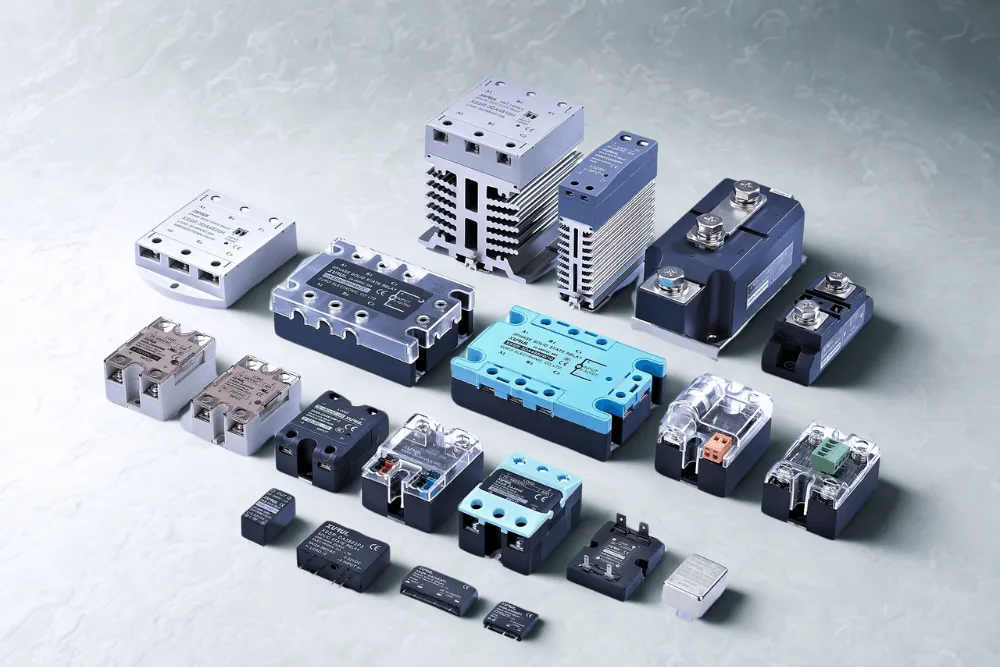
Here are some benefits of adopting solid-state relays to understand their relevance.
Advantages of Using Solid-State Relays.
Let’s explore the five key advantages that make solid-state relays a preferred choice for modern automation.
1. Reliable Switching Without Mechanical Contact Wear.
Traditional electromechanical relays depend on moving contacts to open and close a circuit. Over time, repeated movement can influence contact conditions, especially in applications with frequent switching.
Solid-state relays operate through semiconductor devices instead of mechanical contacts. This design reduces concerns linked to contact wear and mechanical fatigue.
For automation environments, this is important because switching reliability directly affects process continuity, maintenance planning, and equipment availability across operating cycles.
2. Faster Response for Precision Control.
Many automation systems require switching actions that are timely, repeatable, and aligned with control logic. Delays may affect process accuracy in heating, packaging, lighting, material handling, and test equipment.
Solid-state relays provide electronic switching, which allows faster response compared with many mechanical switching methods. This supports applications where frequent and controlled switching is part of normal operation.
3. Quiet Operation for Controlled Environments.
Automation systems are not installed only in heavy industrial areas. Many are placed in laboratories, commercial facilities, building automation panels, medical equipment, and operator-facing spaces.
Mechanical relay operation can create audible clicking during switching. While this may be acceptable in some plants, silent operation is valuable in controlled environments.
Solid-state relays switch electronically, which helps reduce operational noise from the relay itself. This supports cleaner equipment behavior where acoustic comfort and professional operating conditions matter.
4. Strong Fit for Modern Automation Panels.
Modern control panels are becoming more compact and performance-oriented. Controllers, sensors, power supplies, drives, protection devices, and communication modules must work within limited panel space.
Solid-state relays fit naturally into this environment because they work with electronic control signals and are available for different load requirements. Their selection may include AC load, DC load, mounting type, heat dissipation, input voltage, and output rating.
Making them relevant for structured product evaluation, especially when automation teams want components that support reliable operation and practical panel integration.
5. Improved Suitability for Frequent Switching.
Applications with high switching frequency need careful relay selection. Frequent switching can place practical limits on components that depend on moving parts.
Solid-state relays are well-suited for repeated switching because their operation does not rely on physical contact movement. This makes them useful in applications where switching cycles are a regular part of system operation.
For senior engineering and procurement teams, it supports better alignment between component selection and expected duty cycles.
From Component Understanding to Product Discovery
A clear understanding of relay behavior helps teams move from general awareness to more informed product discovery. The next step is to examine the actual application, including load type, control voltage, switching frequency, current rating, surge conditions, ambient temperature, and installation method.
Collaborating with leading electric brands can help users compare solid-state relays with greater technical clarity. It also supports better discussions with suppliers, panel designers, and automation partners. When the application requirements are clearly defined, product selection becomes more practically aligned with long-term automation performance goals.
