
Transitioning to an independent power supply is a significant strategic decision for property owners. It offers total energy autonomy and a substantially reduced environmental impact. However, moving away from the traditional electrical grid requires a notable capital investment. For property owners exploring this transition, understanding the comprehensive off-grid solar system price is the essential first step in determining the viability of such an installation.
When evaluating an independent power network, it is necessary to look beyond the initial capital expenditure.
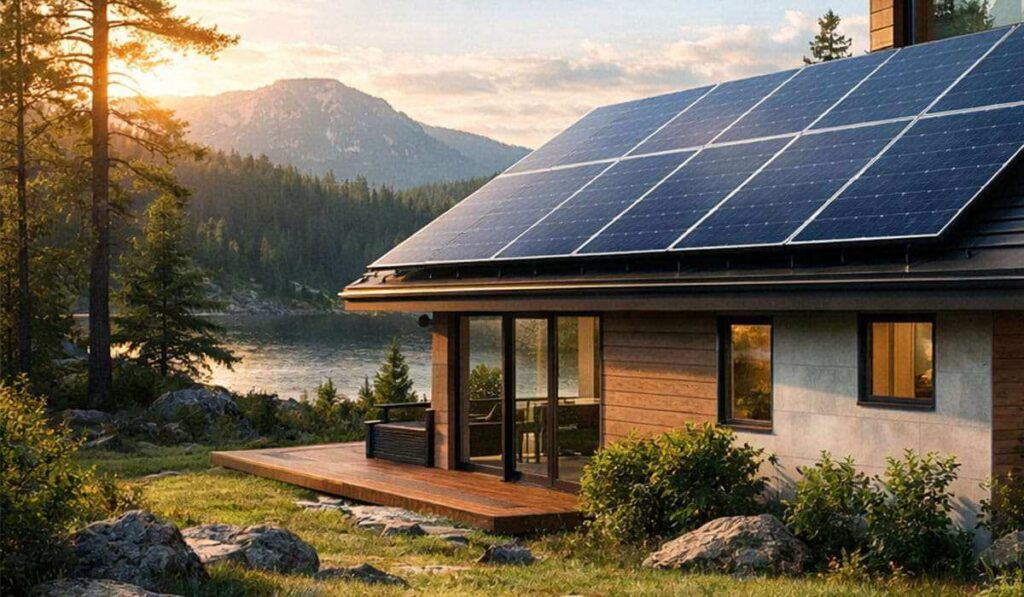
This blog examines the core factors that influence the overall off-grid solar system price, the hardware components required, and the strategic advantages gained from making this investment.
What Determines the Off-grid Solar System Price?
An off-grid configuration must be entirely self-sustaining, meaning it requires more robust and technically advanced infrastructure than a standard grid-tied system. While grid-tied properties can rely on the national grid during periods of low solar generation, an independent system lacks this backup. Consequently, the total off-grid solar system price comprises several specialised components:
- High-efficiency Solar Photovoltaic Panels: The primary instruments for capturing solar irradiance.
- An Off-grid Inverter: The central processing unit that converts Direct Current (DC) from the panels or batteries into Alternating Current (AC) for household appliances.
- Substantial Battery Energy Storage System: Crucial storage capacity required to preserve power for overnight or low-light usage.
- Charge Controllers: Charge controllers regulate the voltage and current flowing, helping prevent overcharging and battery degradation.
As the system must generate and store the entirety of the property’s electricity, the volume of daily energy consumption directly dictates the scale of the hardware.
Consequently, a small, intermittently used rural cabin will reflect a vastly different off-grid solar system price compared to a primary, multi-bedroom residential estate.
What You Pay For: Premium Engineering and Safety Standards.
When reviewing project quotations, focusing solely on the bottom line can be misleading. A premium off-grid solar system price reflects advanced electrical engineering designed to ensure the independent network remains safe, efficient, and resilient under varying conditions. The primary technical features covered by this investment include:
Efficiency for Maximum Solar Output.
When a property relies entirely on daylight, maximising generation efficiency is critical. Premium off-grid hardware incorporates advanced tracking algorithms to capture the absolute maximum solar output possible, even during overcast winter periods.
Investing in higher efficiency minimises the total physical footprint and number of panels required on the roof.
Unity Power Factor for Efficient Power Usage.
In electrical engineering, the power factor represents the efficiency with which incoming electrical power is converted into useful work output. Modern, industrial-grade off-grid inverters operate with a Unity Power Factor (UPF).
This signifies that the electrical power passing through the inverter is fully available to operate heavy inductive loads, such as water pumps, washing machines, and refrigeration units. It eliminates electrical waste and optimises system performance.
IP20 Protection for Safe and Reliable Indoor Use.
Electrical safety is a paramount consideration when managing an autonomous power system. High-quality off-grid inverters feature specialised enclosures providing IP20 protection.
This international standard certifies that the internal electronic components are shielded against solid objects, ensuring safe and reliable indoor use within utility rooms, plant rooms, or garages.
What You Gain: The Long-term Return on Investment.
While the initial off-grid solar system price requires a significant upfront financial commitment, the long-term returns extend far beyond basic utility savings. When balancing the initial expenditure against operational lifetime gains, the advantages are substantial.
Uninterrupted Power for Day and Night Use.
The most immediate operational advantage is total immunity from grid blackouts and power outages. When weather events or infrastructure failures disrupt the public utility grid, an independent property remains entirely unaffected.
Due to intelligent energy management systems, the installation secures uninterrupted power for day and night use. The system automatically balances daytime generation, battery charging, and nighttime discharge to ensure a seamless power supply.
Protection Against Escalating Energy Tariffs.
Utility prices remain subject to market volatility and inflationary pressures. By securing a fixed off-grid solar system price today, a property owner effectively pre-purchases electricity for the upcoming decades at a known, static cost. This eliminates vulnerability to future energy price hikes, rendering household or operational budgets highly predictable.
Complete Autonomy and Environmental Compliance.
Operating an independent solar network provides the reassurance of utilising clean, self-generated renewable energy. Furthermore, for remote or rural properties, the off-grid solar system price is frequently lower than the commercial fees charged by utility companies to excavate trenches and extend mains cabling.
Power Your Property with a Trusted Off-grid Solar Solution.
An off-grid solar system price should not be viewed merely as an ongoing expense, but rather as a strategic capital investment in infrastructure longevity. By selecting systems that prioritise a unity power factor, strong safety enclosures, and continuous day-and-night energy delivery, property owners can build a reliable foundation for long-term energy independence.
Choosing experienced energy solution providers such as Eastman Auto & Power Limited also helps ensure access to dependable technology and trusted expertise. This approach supports a transition to energy independence that is secure, legally compliant, and financially advantageous for decades to come.
