


Key Takeaways:
- Start with real daily frustrations before selecting finishes.
- Prioritize safe shower entry, dependable lighting, dry floors, and clear walking paths.
- Choose surfaces based on traction, moisture resistance, cleaning needs, and repairability.
- Plan storage around the items used every day.
- Include waterproofing, ventilation, permits, and possible hidden repairs in the budget.
- Use qualified professionals for work involving plumbing, electrical systems, drainage, or structure.
A successful bathroom update begins with the way the room is used, not with a paint color or a trendy fixture. Before committing to a layout, identify the daily obstacles that make bathing, cleaning, storing essentials, or moving through the room more difficult than they should be.
Homeowners considering a bath remodel can also review the options described by Jacuzzi Bath Remodel, a bathroom remodeling brand focused on showers, bathtub replacements, tub-to-shower conversions, and accessibility-oriented wet-area updates. Its website outlines services delivered through authorized dealers in locations across the United States, including markets such as Tampa, Florida, so homeowners can determine whether local service is available for their project.
Start With a Room and Routine Audit.
Walk through the bathroom during the morning rush and again before bed. Notice where water lands, which drawers collide, whether towels are within reach, and where shadows make tasks harder. Common issues include a high tub wall, loose bath mats, crowded counters, poor drainage, and doors that restrict movement.
For example, replacing an old vanity without changing its depth may leave the walkway the same width. A better plan may use a shallower vanity, drawers instead of cabinet shelves, and a clearer route between the entrance and shower.
Plan Safer Shower Access.
Traditional tubs, raised shower bases, low-threshold showers, and level-entry designs each suit different spaces and routines. Select the entry type after measuring the room and considering who uses it. A handheld showerhead, reachable controls, securely installed grab bars, a built-in seat, and a recessed niche can make the bathing area more functional without making it feel institutional.
The CDC’s fall-prevention guidance supports practical home changes such as adding grab bars, improving lighting, and removing trip hazards. Shower doors or panels should also contain water effectively while remaining easy to operate.
Choose Flooring for Wet Areas.
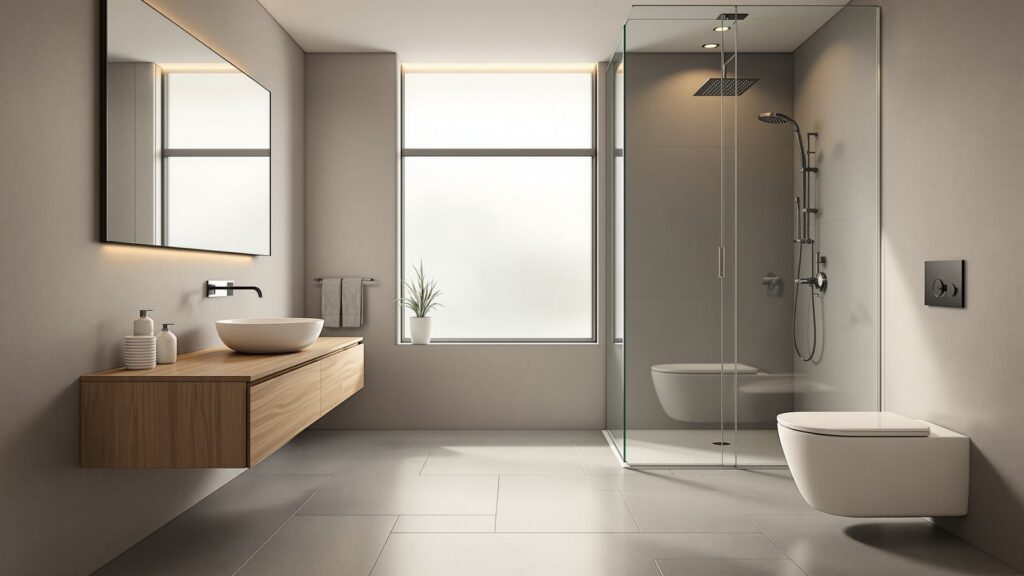
Flooring should be evaluated when wet, not only under showroom lighting. Matte or textured porcelain and other slip-resistant surfaces can be preferable to highly glossy finishes. Smaller tile formats may provide more grout joints and visual texture, but they also add cleaning lines.
- Test how the surface feels to the touch with wet bare feet.
- Ask whether it needs special cleaners or sealing.
- Avoid abrupt height changes between rooms where possible.
- Consider whether grout color will show soap residue or water marks.
- Confirm how isolated damage could be repaired later.
Select Materials That Need Less Upkeep.
Low-maintenance does not mean maintenance-free. Large-format tile can reduce grout lines, while solid-surface panels and acrylic surrounds can limit seams in a shower enclosure. Quartz vanity tops are generally nonporous, whereas natural stone may require more specific care and sealing. Compare cleaning instructions, seam locations, repair options, and expected wear before making a final choice.
Improve Lighting and Visibility.
One ceiling light often leaves shadows on the mirror, inside the shower, and along the floor. Use layered lighting with ambient ceiling illumination, even lighting around the vanity, and fixtures rated for damp ordampons where required. Keep switches easy to reach, reduce mirror glare, and use visible contrast between walls, controls, and floor edges. A soft night light can also improve orientation after dark.
Control Moisture With Better Ventilation.
Humidity can contribute to condensation, peeling finishes, odors, and mold growth when moisture is not managed. An exhaust fan should discharge outdoors rather than into an attic or enclosed cavity. The EPA’s guidance on mold and moisture emphasizes prompt leak repair and drying wet materials.
- Run the fan during bathing and afterward.
- Clean the fan grille regularly.
- Repair leaking supply lines, faucets, and drains promptly.
- Check caulk and grout for gaps or cracking.
Add Storage That Reduces Clutter.
Clutter makes surfaces harder to clean and can reduce usable floor space. Put frequently used items between knee and shoulder height, use drawers for smaller supplies, add a shower niche for bottles, and place towel hooks near the bathing area. Keep medications and cleaning products secured, and preserve enough counter space for daily routines.
Plan for Future Household Needs.
Future-ready design can be both attractive and practical. Consider lever handles, clear walking paths, comfort-height toilets, low-threshold entries, adjustable handheld showerheads, and seating. Reinforcing shower walls during construction can make future grab-bar installation simpler if needs change later.
Build a Practical Remodeling Budget.
The lowest estimate is not always the lowest completed cost. Review proposals for design, demolition, disposal, plumbing, electrical work, waterproofing, ventilation, fixtures, permits, cleanup, warranties, and a contingency for concealed water damage or subfloor repairs. Compare what is included, not just the final number.
Know When to Hire a Professional.
Experienced do-it-yourself homeowners may handle painting, hardware, or simple accessory installation. Hire qualified professionals for plumbing changes, electrical wiring, drainage, waterproofing systems, structural repairs, shower glass, and exhaust venting. Verify licensing requirements, insurance, references, permit responsibilities, written warranties, and post-project service terms.
Questions to Ask Before Work Begins.
- Who is responsible for permits and inspections?
- How long will the bathroom be unavailable?
- Which fixtures, finishes, and accessories are included?
- How will hidden damage be documented and priced?
- How will nearby areas be protected from dust and debris?
- What cleaning products are safe for the selected materials?
- What warranty applies to labor and materials?
Conclusion.
A bathroom remodel should improve everyday life as much as appearance. Safer entry, controlled moisture, useful storage, clear lighting, durable surfaces, and thoughtful professional planning can create a bathroom that remains comfortable and manageable well beyond 2026.
