


Most boats sit unused not because of the weather, but because the owner is tired, in pain, or just not enjoying themselves enough to make the effort worthwhile. If you want to extend your season, start there – before the engine, before the hull – and make your boat somewhere you actually want to be.
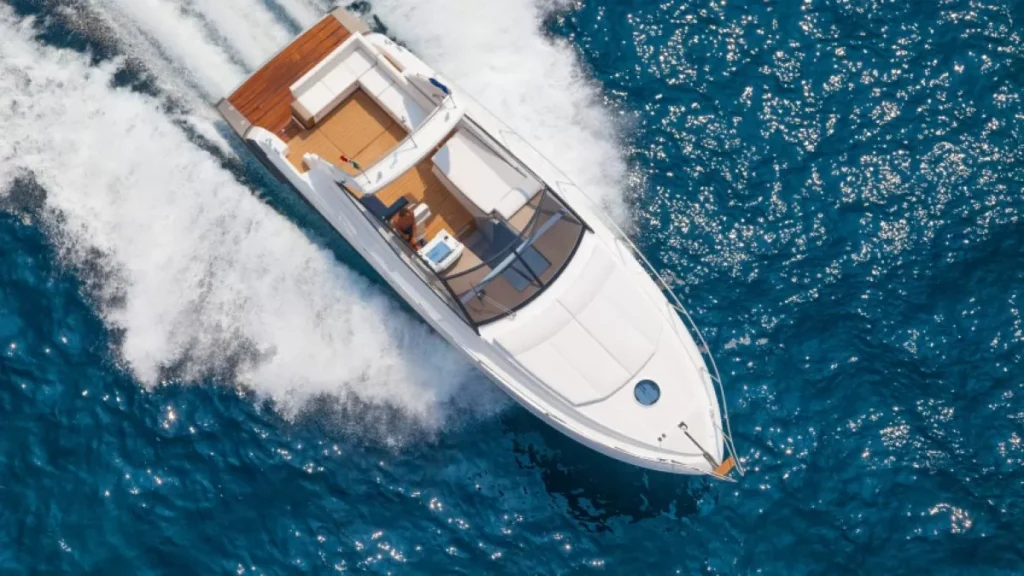
Inspect Your Upholstery Before The Season Builds Momentum.
Don’t buy anything yet. First, figure out what you’re actually dealing with.
Pull the cushions and look at the foam underneath. That faint pinkish discoloration – pink mold – means moisture has already got in. Wet foam that stays wet compresses and doesn’t bounce back, and it starts to smell in a way that no surface cleaner touches. If you find it, you’re replacing foam, not cleaning it.
Run your fingers along the seams and anywhere the vinyl flexes under normal use. Hairline cracks there aren’t something to note and ignore. They’re where water gets in. Shoulder season is the worst time for this – humidity up, temperature swinging – and a small crack that you leave alone in spring will have opened into a proper split by the time autumn comes around.
When you do replace anything, don’t cut corners on the material. Marine-grade vinyl with UV stabilizers handles salt spray without going brittle and stays flexible when the temperature drops. Cheaper vinyl doesn’t, and you’ll be doing the same job again in a season or two.
Upgrade The Helm Station – This Is Where Fatigue Starts.
If you’re doing any meaningful time on the water, the helm seat is where the physical toll accumulates fastest. Factory seating on mid-range boats is often built to a price point, not an ergonomic standard. After a few hours on choppy water, you feel it in your lower back and shoulders.
Suspension seating – designs that use internal mechanisms to absorb wave impact rather than transferring it directly to your spine – makes a measurable difference on rougher days. The shoulder seasons tend to produce choppier conditions than midsummer. If your boat’s helm seat has no shock mitigation, those days get cut short fast.
When replacing worn or inadequate factory seating, it’s worth spending time with a proper supplier rather than a generic retailer. Browsing reputable boat seats for sale gives you access to options built specifically for marine environments – with corrosion-resistant hardware, correct pedestal sizing, and materials that hold up when conditions deteriorate.
Comfort and convenience features consistently rank among the top drivers of how frequently people actually use their boats (National Marine Manufacturers Association). That’s not surprising. Discomfort is the reason most people cut trips short.
Service The Mechanical Components Before They Seize.
It is easy to overlook seat swivels and slides because they tend to function properly until they stop doing so. Cold weather thickens lubricants and creates drag at metal-on-metal contact points. If your swivel mechanism is stiff, you simply stop adjusting it. If you stop adjusting it, you sit in a fixed position longer than you should. This becomes a direct contributor to fatigue.
Clean the slide tracks and swivel bases with a degreaser and follow up with a coating of marine-grade grease – not WD-40 or other spray lubricants, which tend to evaporate too rapidly. Check that pedestal mounts are seated correctly and that the hardware hasn’t corroded. Any 316-grade stainless steel fittings should be fine, but cheaper hardware on older boats can corrode at contact points where two different metals meet in the presence of moisture.
Related: Things to Keep in Mind When Planning a Long-Term Boating Trip.
Do this before the season ramps up, not after something seizes mid-trip.
Reconfigure Your Deck Layout For The Cooler Months.
This requires a different perspective on shoulder-season boating. In high summer, passengers will naturally distribute themselves around your boat. But as conditions become less appealing, they will tend to concentrate in the most comfortable area, which is usually near the helm station. The farther sternward you force people, the colder and wetter they’ll get, and hence the more desirous of a return to shore.
Relatively minor adjustments to passenger comfort zones can make a huge difference here, and it doesn’t necessarily entail a major rebuild. It can be as simple as repositioning some portable deck seating or installing a windbreak-style enclosure around one or both access points to existing, permanent seating. All you’re doing is keeping your crew and passengers in areas where wind and spray aren’t a constant presence. It’s the feeling of being cold and wet that makes people want to head back, not any number on the thermometer.
Thermal properties of seating materials are also worthy of consideration. Dark marine vinyl, for instance, can become surprisingly warm to the touch on a sunny autumn day, which is a real bonus if the cooling breeze is the main reason you’ve laid up the boat. Conversely, lighter-colored materials cool quickly once the sun gets low in the sky in summertime but feel uncomfortably cold to the touch on an October morning.
Apply UV Protection To Extend What You Have.
At the beginning of the season, if you apply a quality UV protectant and water repellent to all upholstery, you create a barrier against the low-angle autumn sun – which is actually more damaging to vinyl than high-summer sun because it hits surfaces at a different angle for longer periods.
Don’t skip this step just because it feels like the season is winding down. Applied correctly, it also adds mildew resistance, which matters once temperatures drop and condensation becomes a regular issue.
The boats that stay in use through autumn aren’t the newest or the most powerful. They’re the ones people actually want to be on.
