


Load capacity assessment is an important process in dock upgrade planning since it defines the degree to which the structure is safe in terms of the number of people, equipment and vessels that can be operated within a specific time.
An undetermined dock can have high stress that approaches breaking of the structure or poses dangers or results in expensive maintenance.
The data of weight distribution and reaction of various components under such weight enables the property owners to make a better choice in terms of materials, design changes, and reinforcements that suit the purpose of using the structure.
Current Structure Evaluation.
The initial stage of the load capacity assessment process is to consider the status of structural components of the dock. The pilings, beams, fasteners, and decking must be checked on the possibility of wear, corrosion, rot, or displacement. Any depreciation slows the original carrying capacity and should be considered in the planning of upgrades. The introduction of new features or the increased use of a dock by adding some additional weight can influence the integrity of the entire dock in a very small way.
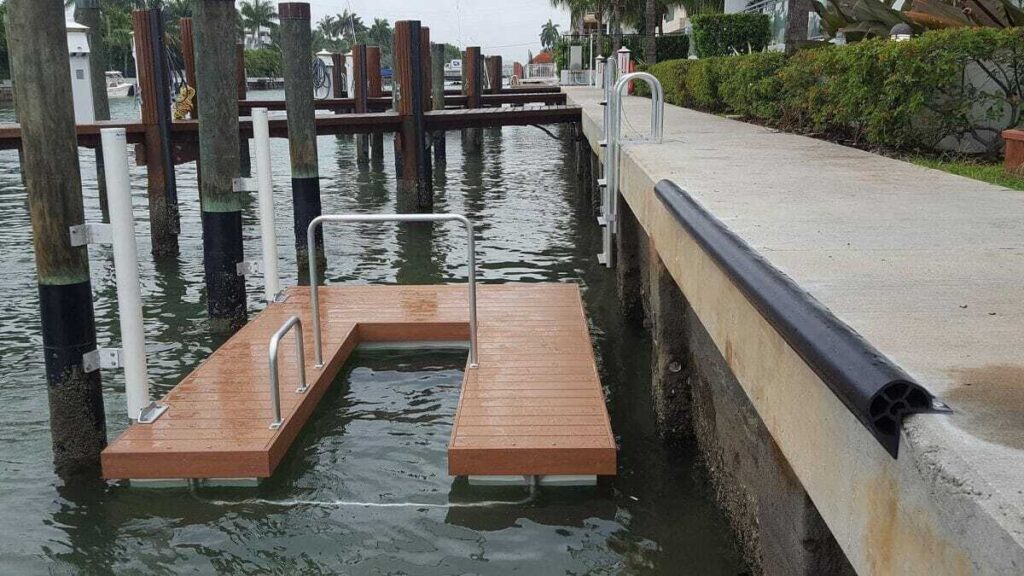
One should also know the way the available dock was initially designed and what the maximum load capacity was. Several older docks were constructed for more recreational purposes and might not carry modern equipment or heavier weight vessels. The additional load distribution is also affected when new additions like a kayak launch dock are considered and a thorough review was done to ensure that the structure was not subjected to concentrated weight in a particular location without over straining the joints or supports.
Load Distribution Concerns.
Distribution of loads is also a significant factor which dictates the capability of a dock to safely bear upgrades. The weight is seldom placed at all, particularly when boats are tied at the various sides or when there are several people in the same area. The tracking of movement of loads throughout the structure and this aids in pointing out areas that might need to be strengthened or changed. Stress points may arise in the form of concentrated loads along the edges or access points which require extra support.
The placement of such features as the seating areas, storage units, or hydraulic boat lift must be considered in the context of the changes the given aspects bring to the balance of the dock. Hydraulic boat lift especially, has dynamic loads that vary with raising and lowering of boats. These forces should be added in the summation of the load to avoid an imbalance of stress which may break the stability or alignment in the long run.
Strength and Upgrades of Material.
The choice of material has a direct impact on the load carrying capacity of a dock. Wood structures might possess varying strength properties to steel or composite structures. During the upgrading process, there is a need to make comparisons of the load ratings of new materials and the requirements of the target application. Materials with better capacity can be used, however, the supporting structure must also be able to cope with the extra forces.
The upgrading of materials does not necessarily require the replacement of decking. There is also a likelihood of reinforcement needed by substructure components like cross beams and connection to suit the enhanced surface strength. In other instances, a combination of materials can be a better option to improve the performance, however the linkages between the two materials should be well engineered so that the dock system will experience uniform load transfer.
Factors of Environment and Usage.
The load capacity can be greatly affected by environmental conditions in the long run. The response of a dock to weight is affected by factors like water level fluctuation, wave action, ice formation and the stability of soil among others. A building which seems to be stable when the weather is calm might be subjected to extra stress during storms or whenever the seasons change. Any load evaluation must include these variables lest real-life demands be underestimated.
Load requirements are also influenced by patterns of usage. A dock that is going to be heavily used in light recreation will not be the same as one that is going to have a lot of boat action, or heavy equipment. It is also critical to predict future use as much as it is important to assess current needs. Considering the possible changes in the size of traffic or vessels, one can also plan that the dock will be applicable and safe even in the future and will not require constant upgrades.
Assessment of load capacity when upgrading the docks is crucial in safety, durability and long-term operation. Structural problems and shortening the life of a dock can be prevented by the property owners by a thorough evaluation of the existing structure, the distribution of the loads, and the choice of the appropriate materials. The consideration of the present and future usage is useful in maintaining the dock to be used with changing needs. Other factors like the environmental conditions and added features are also a major issue of overall performance and one should take into account the effect of other factors like water movement, weather and other equipment on stress on the structure. Such an extensive and prudent consideration of the load evaluation would not only preserve the investment but also provide an efficient and stronger waterfront zone to be utilized in everyday life.
